
The term “data platform” started to emerge decades ago when companies were drowning in newly acquired masses of data they’d started gathering, and they needed to create a solid system to handle it and benefit from the content.
To be precise, companies needed all-in-one solutions to gather, store, process, analyze, and manage their data. Since then, the ideas around data platforms and data management have come a long way, but today’s businesses still face the same challenges as they did decades ago: data silos, quality, accuracy, and data overload.
One of the reasons why is that data keeps growing at an exponential pace and businesses are struggling to keep up. So, the question is, can modern data management and analytics platforms really help companies escape the never-ending struggle of managing data to become truly data-driven organizations?
Diversity of data platforms
Nowadays, hardly any company starts from scratch when it comes to building a data platform. To a certain degree, all businesses make use of technologies, methods, and structures that shape their data platform. However, if an organization decides to formalize its data management approach, which architecture should they choose?
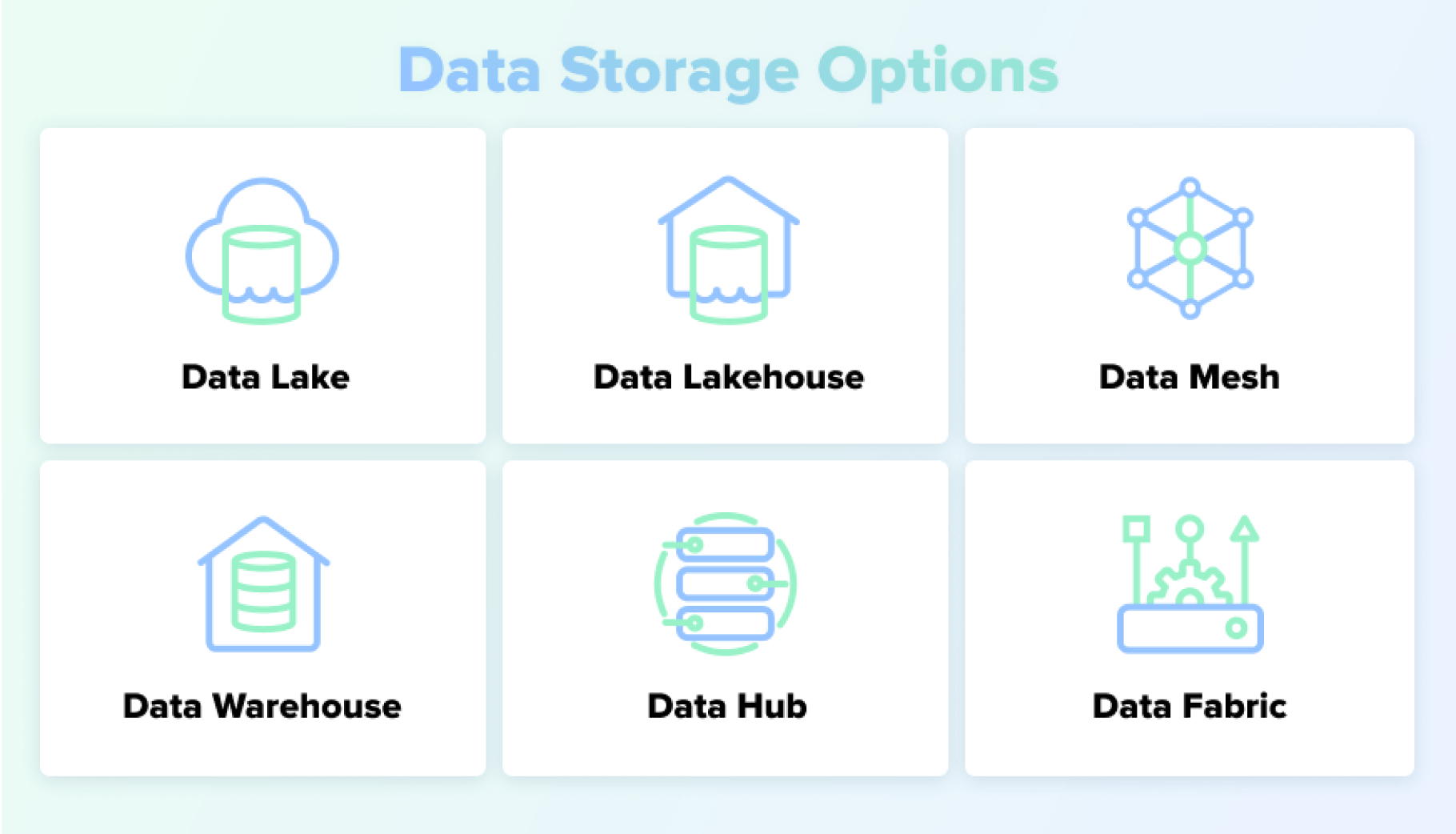
We have plenty of options to choose from, like Data Lakes, Data Warehouses, Lakehouses, Hubs, and, lastly, Data Mesh or Data Fabric. The latter options promise to increase data utilization efficiency while cutting down human-driven data management tasks by half. It sounds like the magic wand we have long been looking for, right?
It might be, but the obstacle is that you cannot buy the data fabric; you can only develop it based on use cases, design, and various tools. The same applies to any other option for data platform implementation.
So, the key factor that determines the success of your data and analytics journey won’t be primarily the architecture you choose but rather your commitment to principles that align with the latest trends in establishing a data-driven organization.
Find more about the benefits of SSBS AI-Dirven EcoSystem
MORE ON THE ECOSYSTEMKey Trends in Data & Analytics
These days, the data & analytics trends landscape is oversaturated with guesses, facts, and best practices that work for some businesses and do not make sense for others. Let’s review a few examples of these trends listed from the world’s leading research agencies and enterprise businesses:
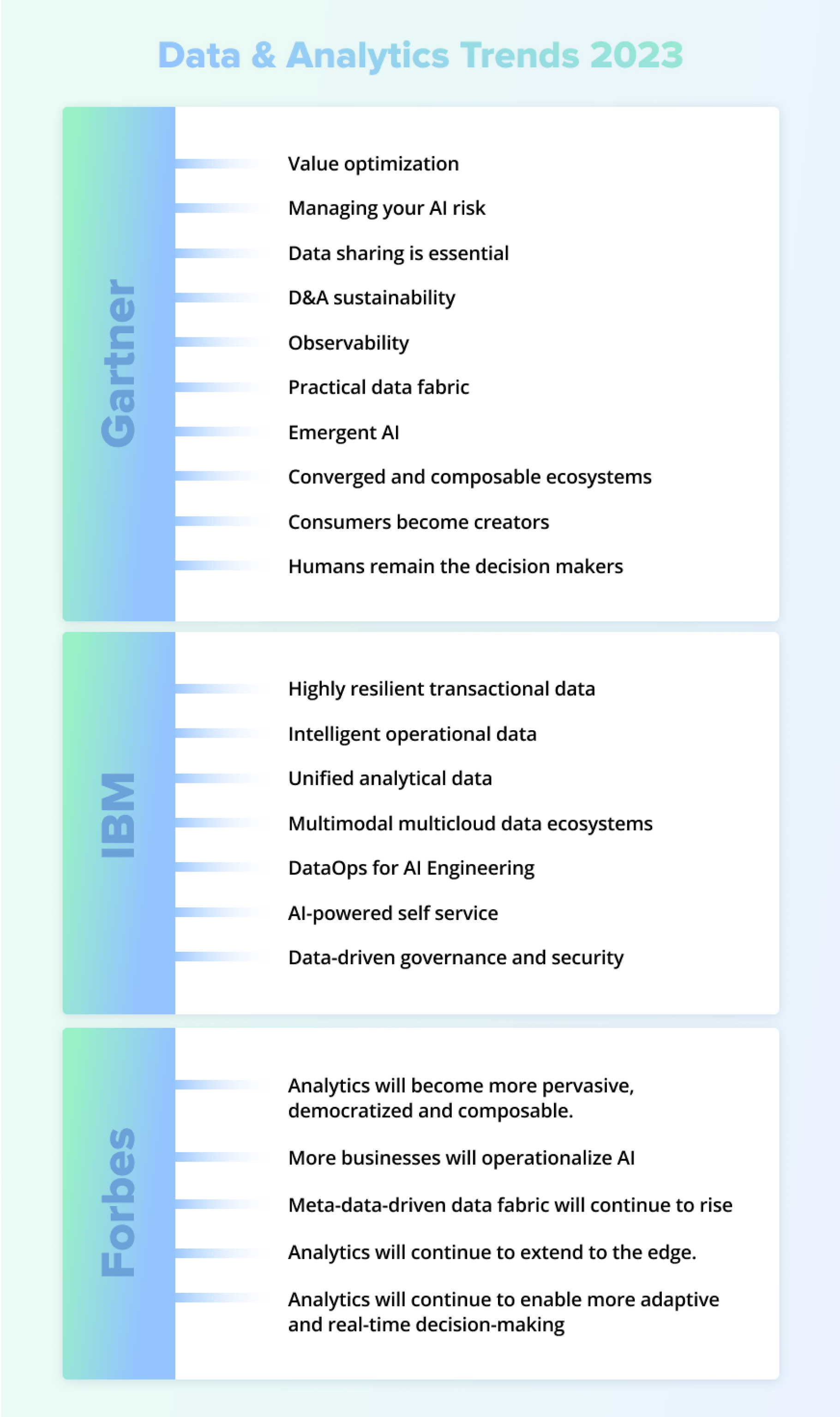
Gartner: 10 Data and Analytics Trends to Keep on Your Radar; IBM: Seven trends that will impact your data management strategy; Forbes: Five Data Analytics Trends On Tap For 2023.
These examples clearly demonstrate that no business can simply narrow down the essential approaches that will yield the most significant impact. Our belief is that the solution lies in establishing fundamental principles for implementing your data strategy, with the creation of a data platform being an integral part of it.
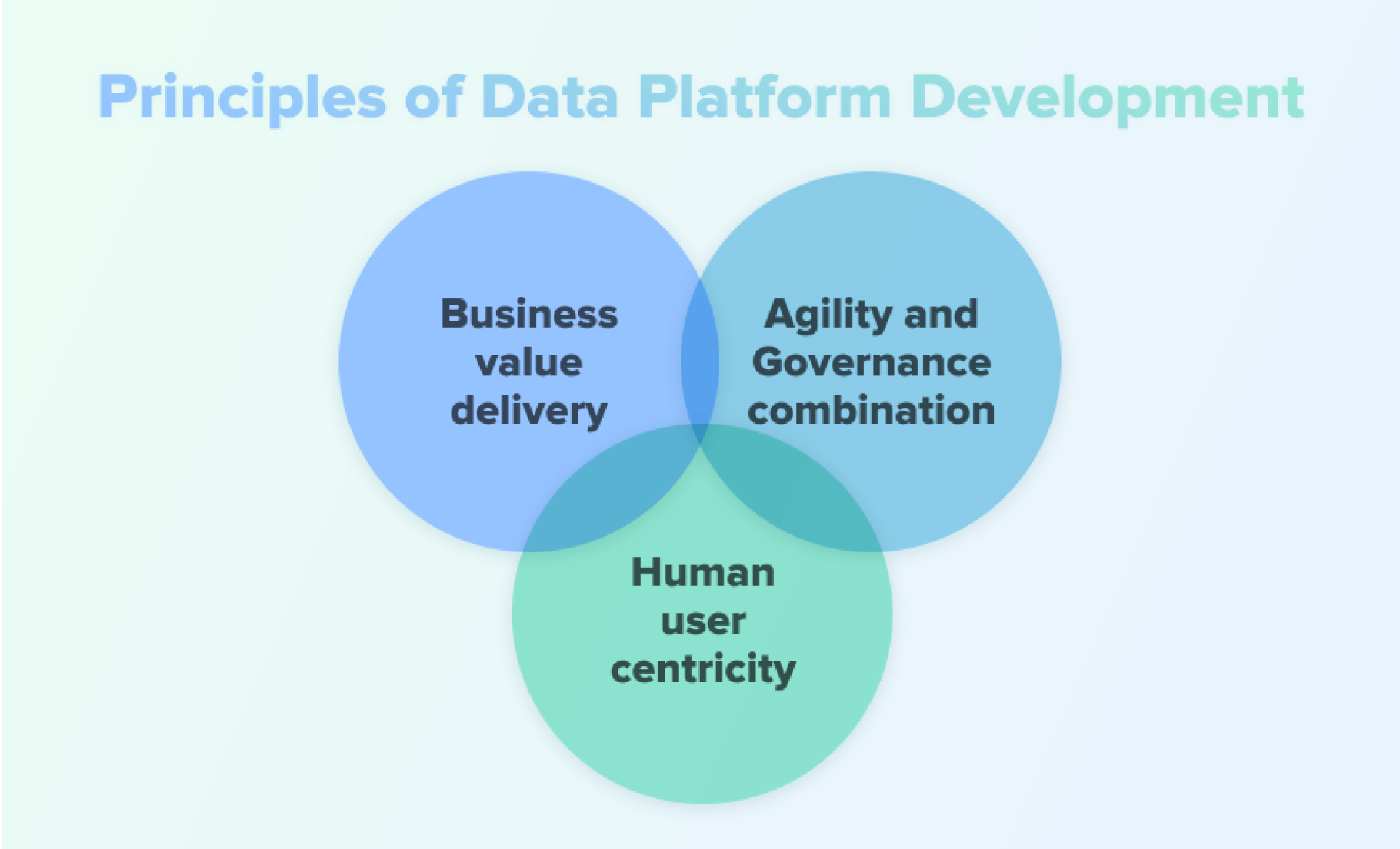
So, what are these fundamental principles we refer to? We would like to highlight three general rules, the combination of which will help achieve greater efficiency in managing and utilizing your data resources: business value delivery, agility and governance combination, and human user-centricity.
Business Value Delivery
This principle can easily get lost when building a data platform for the entire organization, given the project’s complexity and scale.The growing volumes of data make it challenging for organizations to manage and process all available data. In such a scenario, it’s more effective to prioritize data that will have an immediate impact rather than embarking on large-scale projects that may take a while to yield results.
By delivering results and generating value for the business, the Data & Analytics (D&A) team can gradually expand the “visible area” of data. In this way, the D&A function transforms into a value provider that can proactively identify and help to implement new business opportunities.
This approach aligns with Gartner’s predictions, consolidating several trends under the unified theme of “Think like a business”. The principle is also applied in the end-to-end process of data solution development, where impact and value evaluation are the first steps.
Related Material: Watch our webinar How Data Transform Business
Agility and Governance Combination
The agile approach aligns with the earlier principle, encouraging a focus on actions that will generate the most significant business impact rather than getting stuck in rigid plans.
To achieve this, businesses need to move from the concept of a data platform to a data ecosystem, an interconnected network of data sources, technologies, processes, and stakeholders. This will help prioritize actual business needs, quickly respond to changing situations, and ensure alignment with current business processes.
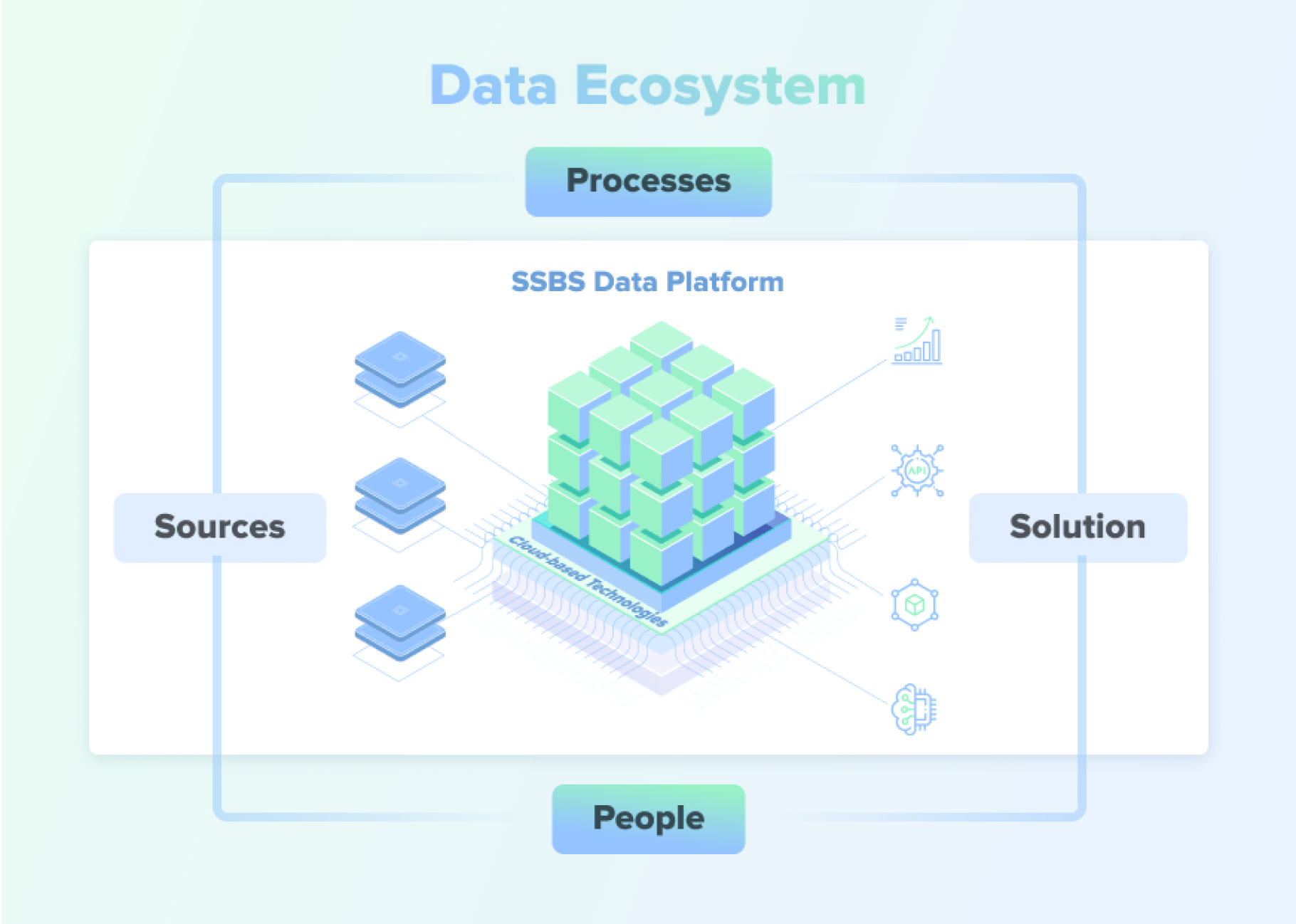
At the same time, most analysts highlight the increasing importance of Data Governance. Data governance is crucial for organizations as it ensures data availability, integrity, and security, enabling informed decision-making, regulatory compliance, and effective data management across the organization.
Combining data governance with data agility allows organizations to balance maintaining data quality and security while enabling flexibility and quick access to data for agile decision-making and innovation.
This combination empowers organizations to manage their data assets effectively, drive data-driven initiatives, and adapt to changing business needs while upholding data governance principles.
Human User Centricity
The increasing use of AI/ML models for both routine employee tasks and advanced analytics should not create the impression of excluding the human factor from the decision-making process. Humans remain central to decision-making, but it is necessary to enable them to make decisions based on more insightful data analysis at all levels of business management.
This can be achieved by considering the following factors:
- Prioritizing user needs when developing and implementing data tools.
- Data democracy – enabling a wide range of users to access data, understand it, and use it
- in the decision-making process.
- Developing data literacy among employees.
All of this will help foster a new culture of data-driven decision-making among all staff members, ultimately transforming the organization into a data-driven entity.
- Prioritizing user needs when developing and implementing data tools.
- Data democracy – enabling a wide range of users to access data, understand it, and use it
- in the decision-making process.
- Developing data literacy among employees.
The Last Piece of the Data Platform Puzzle
The development of a data platform is a crucial component for organizations seeking to harness the power of their data assets effectively. Each organization is unique, so we suggest starting with a data audit to evaluate the current state of the data platform and identify gaps, risks, and growth opportunities.
SoftServe Business Systems, with its expertise in building complex data platforms, can assist you with audits, introducing technological trends, assessing resource requirements, and determining the necessary technologies.
However, the real value of any technology emerges when seamlessly integrated with people, processes, and infrastructure. Optimizing agile business processes, driven by individuals focused on business outcomes, enables successful adaptation in a complex environment. Embracing these principles allows organizations to truly become data-driven and thrive in the new data rich and analytics reality of today’s business environment.